
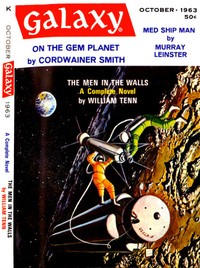
Med Ship Man by Murray Leinster
Got a soft spot for quiet sci-fi that delivers solid mystery with a side of old-school charm? Murray Leinster’s Med Ship Man will grab you.
The Story
Calhoun (official title: Medic-Ship Man) arrives on the planet Kostoln after an unclear but puzzling distress signal. As soon as he tries to land, someone shoots a laser his way. Not a friendly welcome.
It gets worse. The small pioneer town he finds has some sickness—people are seeing things that don’t exist, getting paranoid, turning mean. There’s a heavy, green moss the size of a house on the outskirts, giving off a gas that’s harmless usually—but not this year. The contamination from a trade crash makes people hallucinate and collapse. Calhoun soon realizes that the young man running the supply depot plans to start a global war so he can grab land. But the planet count is only seventy outpost towns connected by narrow, hostile travel routes—this might be the first outbreak of a planetary kill-switch. Only Cal stands between it.
Why You Should Read It
Calhoun runs on common sense and stubborn grit, not gadgets. I like that—he sterilizes with a blanket, cusses slower than he thinks, and gambles on theory more than jet-fly craft. The mystery remains simple: is the gas? the scared folk? another murder? but Leinster keeps you reading because the escape looks shut each step.
There’s a low intensity, more Ray Bradbury’s practical otherworlds than overload jargon. The old medical ethical situation crops up—sometimes you run risk to your own skin and call that duty. He says nothing bigger than should do. That alone stays uncommon in comics; here it’s everything.
Final Verdict
Read it if you back clear-headed survival thrillers in small towns that just happen to live under other suns. It’s right for any visitor who read early Heinlein fix-it brain and Le Guin small-touch living. Understated excitement craws across skin. Pick a fresh night reading lamp. Kick behind the daily log-in buttons. Let the Med Ship Man give a history about when quiet problem-solving counted bigger than weapons bigger half times.
No rights are reserved for this publication. You can copy, modify, and distribute it freely.




Matthew Wilson
2 years agoI found the data interpretation to be highly professional and unbiased.