
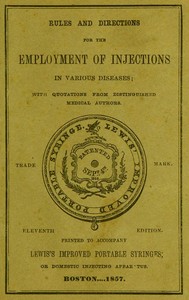
Rules and directions for the employment of injections in various diseases by Lewis
Let's be clear from the start: this isn't a novel. Thomas Lewis's 1791 book is exactly what the title promises—a practical manual. It's a set of instructions for other doctors and surgeons on how to prepare and administer medicinal enemas, which he calls 'injections,' for a bafflingly wide range of ailments.
The Story
There's no plot, but there is a narrative. It's the story of 18th-century medical logic. The 'story' follows Lewis's firm belief that many diseases originate in the bowels. His solution? Direct treatment via injection. The book walks you through recipes for different medicinal mixtures (often containing things like laudanum, bark, or even brandy), detailed instructions on the mechanics of the syringe, and specific protocols for illnesses like dysentery, fevers, and 'nervous disorders.' The conflict is between the medical understanding of the time and what we know now. You keep reading, thinking, 'They really believed this was the best option?'
Why You Should Read It
I found this book utterly gripping because of its sheer confidence. Lewis writes with absolute certainty about methods that seem alien to us. There's no hemming and hawing; he states his rules as fact. It's a powerful reminder that every era of medicine is built on theories that later generations may question. Reading it makes you appreciate the scientific method and clinical trials we have today. You also get a stark, unfiltered look at what patients endured. It's not for the squeamish, but it's a raw piece of social history. The book’s voice—direct, instructional, and completely of its time—is its most compelling character.
Final Verdict
This is a niche read, but a rewarding one. It's perfect for history buffs, especially those interested in medicine, science, or everyday life in the 1700s. If you enjoyed books like The Butchering Art or are fascinated by how people solved problems with the tools they had, you'll be captivated. It's not a casual beach read, but as a short, primary-source dive into a forgotten corner of medical history, it's absolutely fascinating. Just maybe don't read it right after lunch.
This content is free to share and distribute. Use this text in your own projects freely.
Linda Lee
1 year agoAfter a thorough walkthrough of the table of contents, the critical analysis of current industry standards is very timely. A mandatory read for anyone in this industry.
George Jones
1 year agoA sophisticated analysis that fills a gap in the literature.
Susan Martin
11 months agoThe layout of the digital version made it easy to start immediately, the visual layout and supporting data make the reading experience very smooth. A perfect balance of theory and practical advice.
Edward Ramirez
3 months agoI didn't expect much, but it manages to explain difficult concepts in plain English. One of the best books I've read this year.








Michael Moore
3 months agoI was skeptical about the depth of this book at first, but the critical analysis of current industry standards is very timely. The price-to-value ratio here is simply unbeatable.