
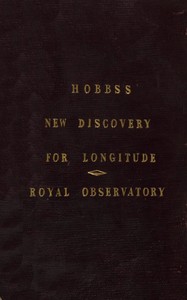
A new discovery for finding the longitude by William Hobbs
Let's set the scene: it's the late 1600s. Global trade and naval power depend entirely on ships crossing oceans. Sailors could figure out their latitude (north-south position) pretty well, but knowing their longitude (east-west position) was a dangerous guessing game. Getting it wrong meant running aground, missing ports, or vanishing entirely. The 'longitude problem' was a matter of life, death, and national treasure.
The Story
This book isn't a story in the traditional sense. It's William Hobbs's personal blueprint for a solution. He presents his method, which seems to involve a combination of astronomical observations and timekeeping. You follow his logical steps, his diagrams, and his arguments as he builds his case. The real drama isn't in characters, but in the silent, high-pressure context: the race for the famous Longitude Prize offered by the British Parliament. Hobbs is essentially making his pitch, trying to prove that his system is the accurate, practical, and affordable answer everyone has been searching for.
Why You Should Read It
You should read this for the raw, unfiltered voice of scientific pursuit. Hobbs isn't a distant historical figure here; he's a person trying to solve a huge problem. You can feel his conviction on the page. It's a fascinating look at pre-modern science—the methods, the tools, the way ideas were communicated. It also makes you appreciate the sheer scale of the challenge. We take GPS for granted, but this book shows the monumental human effort required to simply know where you are on the planet. It turns an abstract historical fact into a tangible, personal struggle.
Final Verdict
This one's perfect for history buffs who love primary sources, or for anyone fascinated by maritime history and the history of science. It's not a light beach read, but a short, concentrated dose of 17th-century ingenuity. If you've ever enjoyed books like Longitude by Dava Sobel (which tells the broader story of the problem), reading Hobbs's original proposal is like examining a key piece of evidence from that epic quest. It’s a compelling artifact from the front lines of a scientific revolution.
This is a copyright-free edition. You are welcome to share this with anyone.
Kimberly Robinson
7 months agoCitation worthy content.
Liam Martinez
2 years agoGreat digital experience compared to other versions.